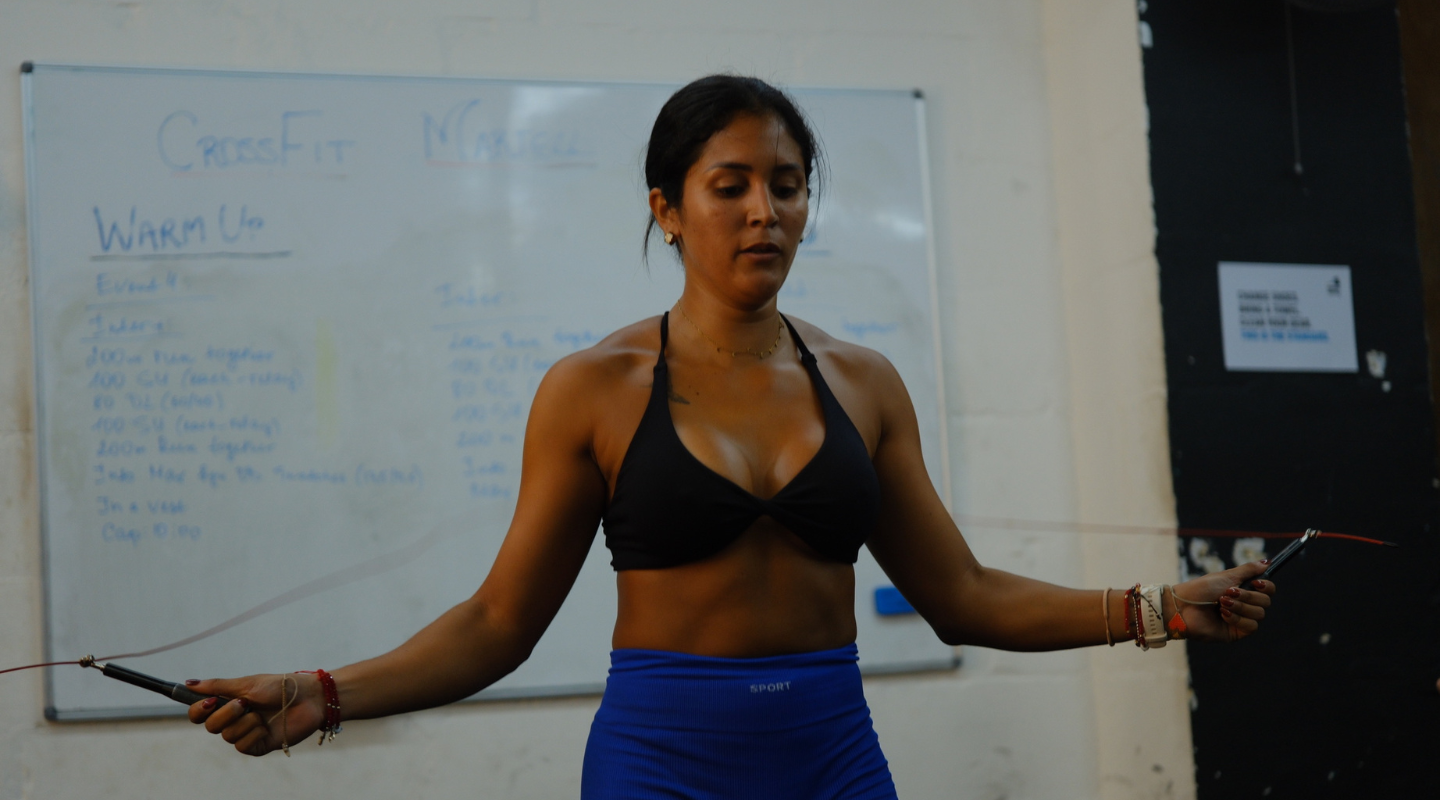
Think back to the first time you tried a double-under.
Your brain was probably screaming: Jump. Turn the rope. Not too early. Keep your hands down. Relax. Jump again. And somehow none of it worked.
Then, after enough practice, something changed.
One rep became two. Two became five. Eventually, you stopped consciously thinking about every tiny part of the movement. Your body just knew what to do. Except technically, it wasn't just your body that learned. Your brain did too.
And this is one of the most interesting parts of CrossFit that we rarely talk about.
Yes, CrossFit can make you stronger, fitter and more powerful. But every time you learn a new physical skill, correct a movement, coordinate several things at once or adapt to something unfamiliar, you are also challenging your nervous system.
Welcome to the slightly nerdier side of fitness.
Your Brain Is Designed to Change
Our brains aren't fixed pieces of hardware. They can adapt in response to what we repeatedly ask them to do. Scientists call this neuroplasticity.
When you learn and practise a skill, the nervous system changes how different areas of the brain communicate and how efficiently they control movement. Research into motor learning has shown changes in brain activity, connectivity and even brain structure associated with acquiring physical skills. In very simple terms:
You practise → your brain receives information → you make mistakes → your brain adjusts → you practise again → the movement becomes better.
Those frustrating failed reps? They're information. Your brain is comparing what you wanted to happen with what actually happened and adjusting the next attempt.
That's why learning movement can sometimes feel completely hopeless… and then suddenly click.
CrossFit Is Full of Brain Training Hiding Inside Exercise
Imagine two workouts.
Workout A:
Sit on a machine and perform exactly the same movement for 30 minutes.
Workout B:
Learn a snatch.
Coordinate a jump rope.
Balance upside down.
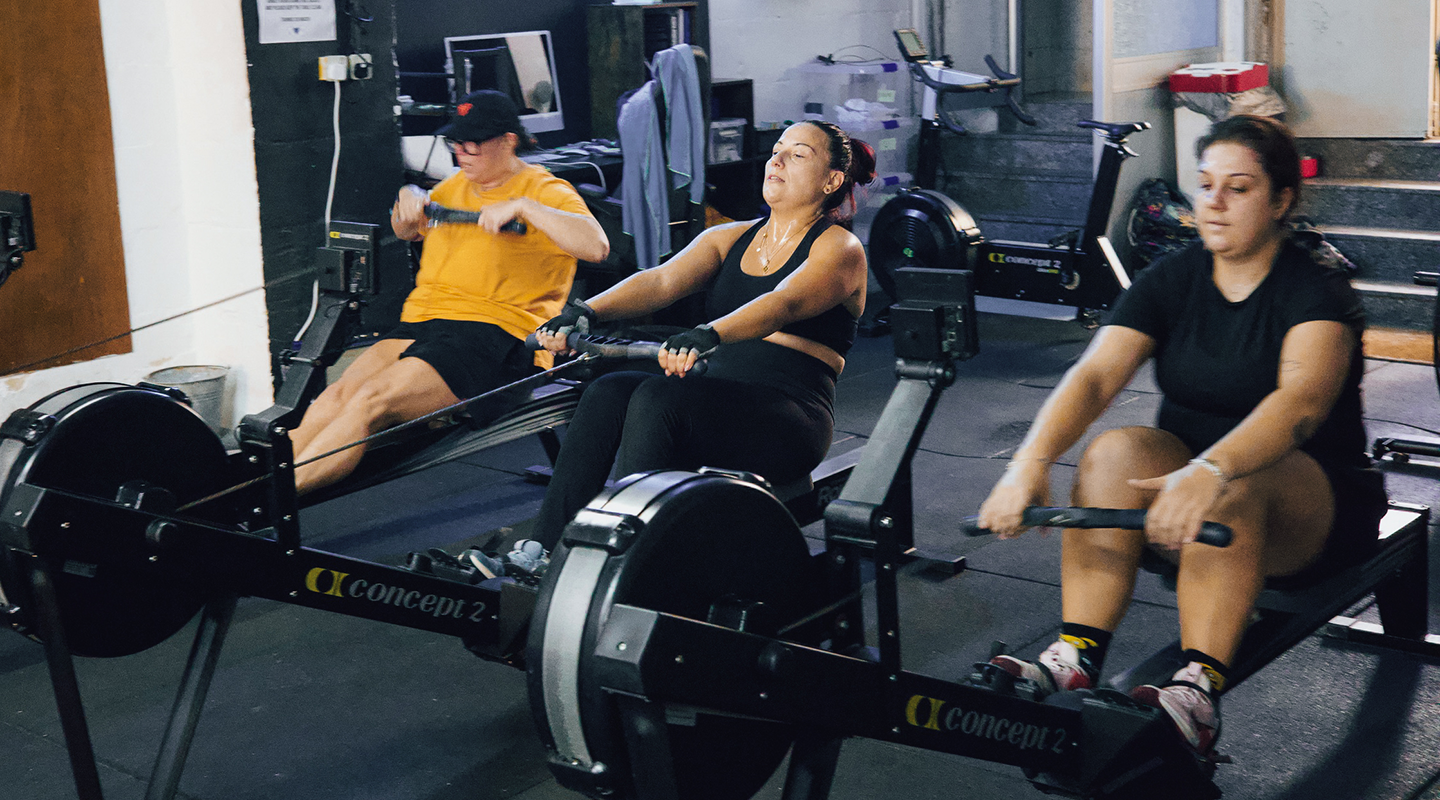
Row.
Perform toes-to-bar.
Remember the workout.
Adjust your pacing.
Respond to your coach's cue.
Change your technique when you're tired.
Both involve physical exercise. But the second asks your nervous system to solve a much wider variety of movement problems.
That's where CrossFit becomes particularly interesting.
CrossFit is built around constantly varied functional movements, combining gymnastics, weightlifting and cardiovascular work. And many of those movements aren't simply tests of strength. They require:
- coordination
- balance
- accuracy
- timing
- spatial awareness
- reaction
- rhythm
- body control
CrossFit's own training methodology actually classifies coordination, agility, balance and accuracy among the physical skills with a strong neurological component.
So when you're trying to learn a clean, you're not simply making your legs stronger. Your brain has to learn:
Drive now. Extend now. Move under the bar now. Catch here. Balance here.
That's a motor skill.
Movements that once required enormous concentration can eventually become increasingly automatic.
Recent research into sports skill acquisition describes several systems working together: areas involved in error correction, movement execution, action selection and reinforcement all contribute as a skill progresses from the awkward learning stage toward more automatic performance.
Which explains something every CrossFitter knows: There is a massive difference between being strong enough to do something and actually knowing how to do it.
You can be strong enough for a muscle-up long before your nervous system has figured out the muscle-up.
Exercise May Also Create a Better Environment for Learning
Here's where things get even cooler.
Exercise itself appears to support processes associated with neuroplasticity. One molecule you'll often hear mentioned is BDNF — brain-derived neurotrophic factor.
You don't need to remember the name.
Think of BDNF as one of several biological signals involved in helping neurons survive, adapt and modify their connections.
Research has found that physical exercise can influence BDNF and other neuroplastic processes associated with learning and memory.
Studies have also found that aerobic exercise can influence the brain's capacity for neuroplastic change, although the exact effects depend on things like intensity, duration, training status and the type of task being learned.
And interestingly, a meta-analysis looking at exercise and motor learning found evidence that cardiovascular exercise can help with the consolidation of newly learned motor skills — essentially helping the nervous system retain what it has practised.
So training isn't simply asking the brain to learn. Physical exercise may also help create biological conditions that support that learning.
And Then CrossFit Makes You Do It While Tired
This is another fascinating layer.
It's one thing to perform 10 beautiful wall balls while completely fresh. It's another thing to perform them after rowing 500 metres while your heart rate is high and someone is shouting: "KNEES OUT!"
Now your brain has another problem to solve: Can I maintain movement quality while my body is under stress?
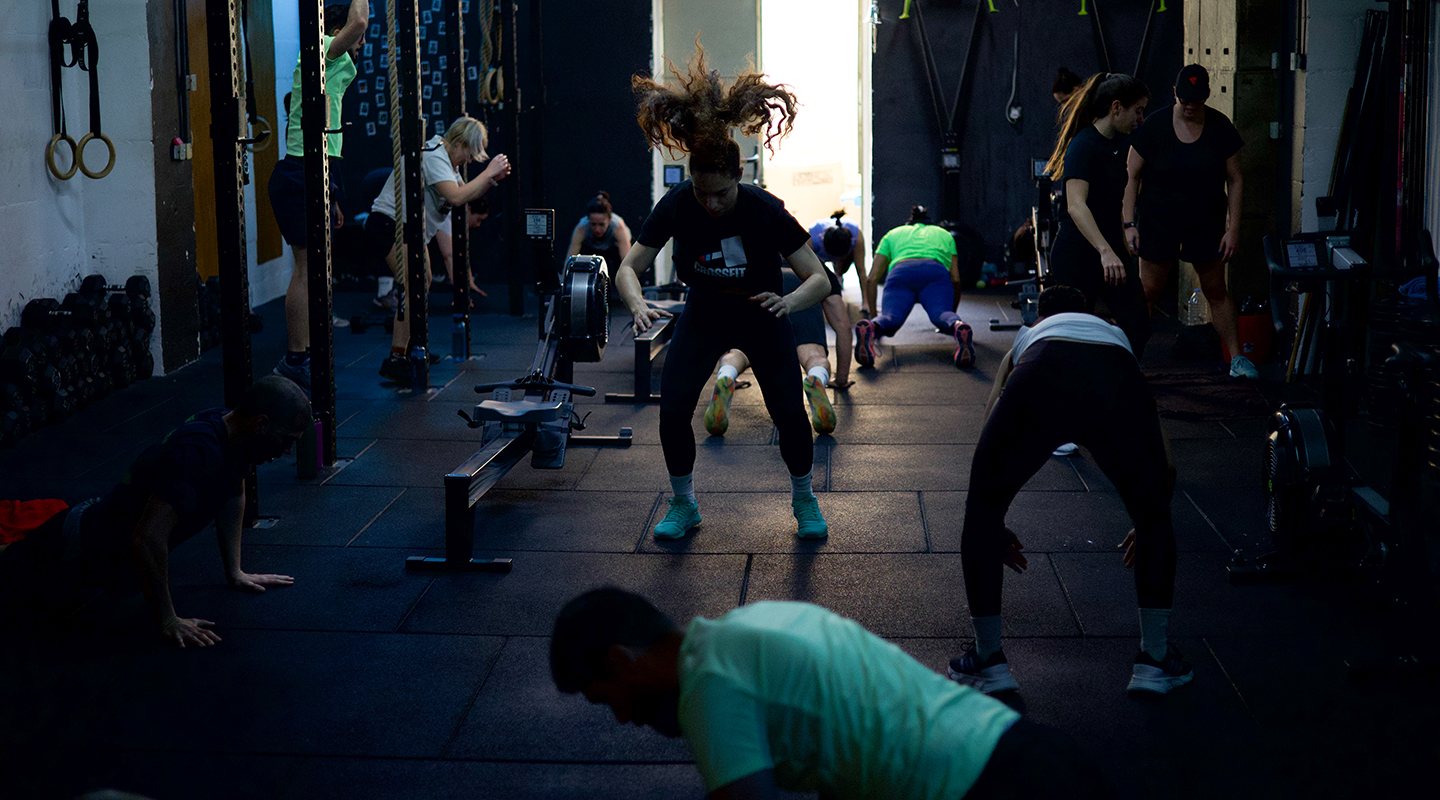
CrossFit regularly asks you to pace, count repetitions, listen to coaching cues, make decisions and coordinate movements while fatigued.
That doesn't mean every brutal workout magically makes you smarter — the science is nowhere near that simple. We shouldn't claim that "CrossFit creates more brain cells" or that a 15-minute AMRAP automatically improves your IQ.
But CrossFit repeatedly combines physical exercise with motor learning, coordination, problem-solving and adaptation. And those are exactly the kinds of challenges our nervous system is built to learn from.
Beginners Might Actually Be Doing the Most Learning
This is why being a beginner isn't something to be embarrassed about. It's fascinating.
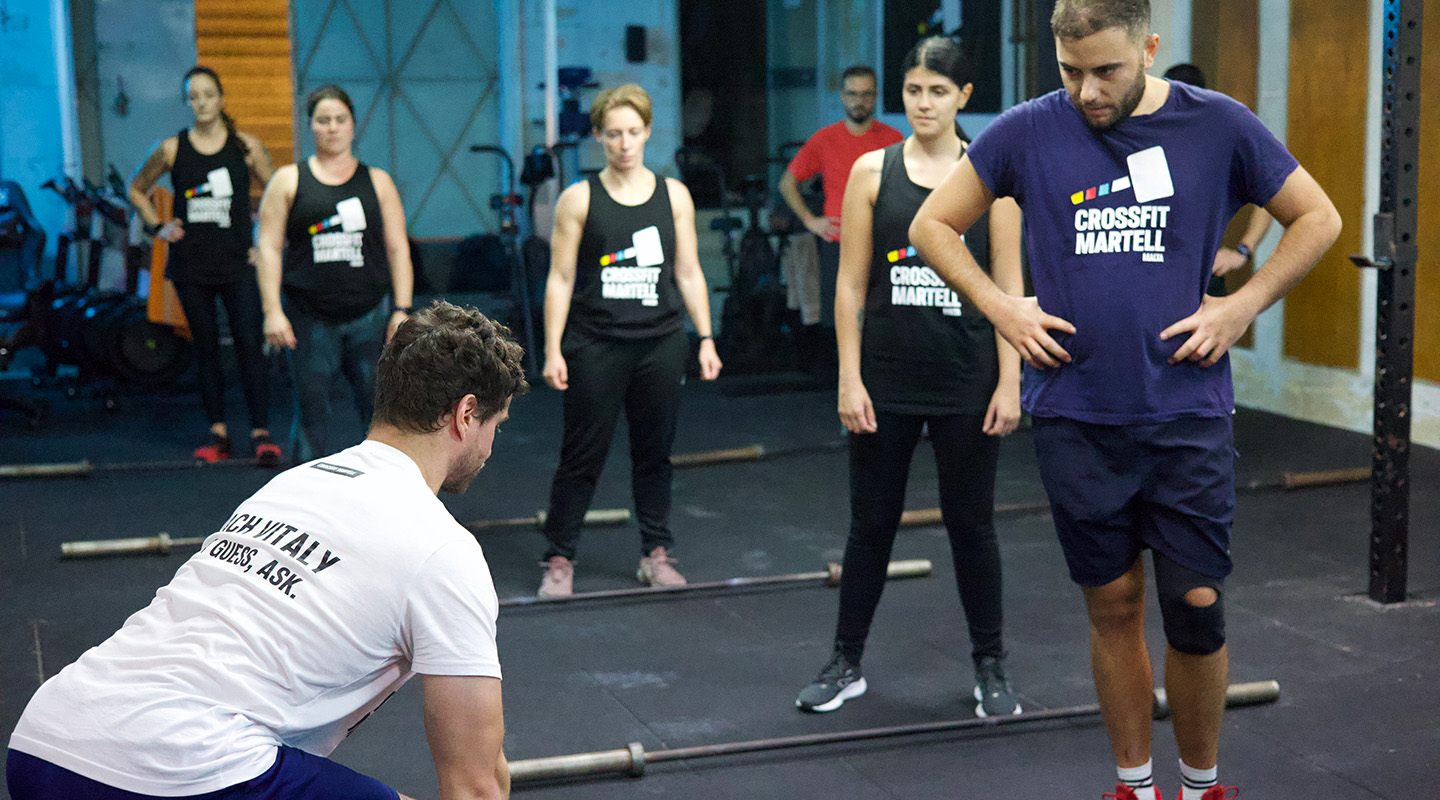
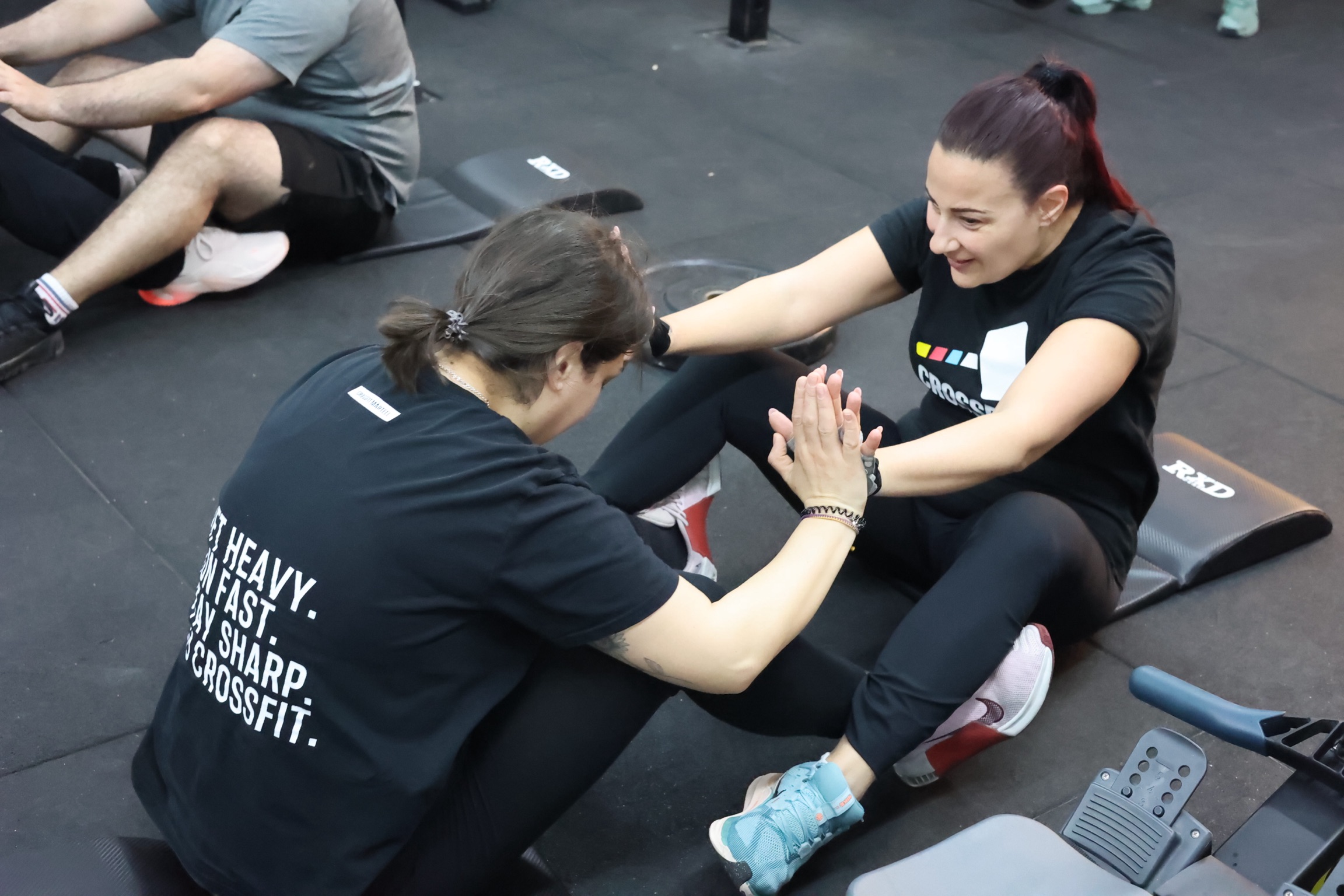
Imagine someone attending their first CrossFit class. They have to learn:
Where should my feet go?
How do I brace?
What's a front rack?
How do I move my hips?
How do I hold the bar?
What does "AMRAP" mean?
Why is everyone suddenly grabbing a skipping rope?!
Their brain is absorbing a ridiculous amount of new information. Six months later, many of those things require almost no conscious thought. That's learning.
You didn't just build muscle. You built a movement vocabulary.
This Matters As We Get Older Too
The ability to learn movement doesn't disappear when we stop being 20. Research shows that older adults retain the ability to improve motor skills and that learning remains associated with neuroplastic changes in the aging brain.
Research into exercise more broadly also consistently links physical activity with processes supporting brain health and cognitive function across the lifespan.
That gives learning physical skills another purpose.
Maybe your goal isn't to become a competitive CrossFit athlete. Maybe you're 45, 55 or 65 and learning how to deadlift properly. Learning to balance. Learning a kettlebell swing. Learning to coordinate your feet with a skipping rope. Learning how to move efficiently around a barbell.
Your nervous system is still being asked to adapt.
And that's something worth continuing to challenge throughout life.
So Next Time You Can't Get a Skill…
Remember this.
When you miss your double-under for the 27th time…
When your clean still feels awkward…
When your coach gives you the same cue for what feels like the hundredth time…
When everyone else appears to understand the movement except you…
You're not necessarily failing.
You're learning.
Your nervous system is collecting information. Every good repetition reinforces the pattern. Every mistake gives it feedback. Every correction improves the map. And eventually there is that brilliant moment every athlete experiences:
Oh. THAT'S what you meant.
Suddenly the rope passes twice. The bar lands perfectly. You find your balance upside down. Your first pull-up reaches the bar. Your first muscle-up goes over the rings.
Something that once seemed impossible becomes something your body simply knows how to do.
So yes, celebrate the stronger legs. Celebrate the first pull-up. Celebrate your faster 2K row.
But also appreciate what had to happen behind the scenes for your body to learn how to do something today that it couldn't do six months ago. Because fitness isn't only about building a stronger body.
It's about building a body and brain that keep learning how to do more.
A note on the science
Research specifically examining CrossFit and long-term cognitive function is still limited, so it would be inaccurate to say CrossFit has been proven to produce unique neurological benefits compared with other forms of exercise.
What we do have strong evidence for is the relationship between physical exercise and neuroplasticity, and between motor-skill learning and changes within the nervous system. CrossFit brings physical conditioning and frequent motor-skill practice together, making that connection particularly interesting to explore.

.jpg)
.jpg)
.jpg)